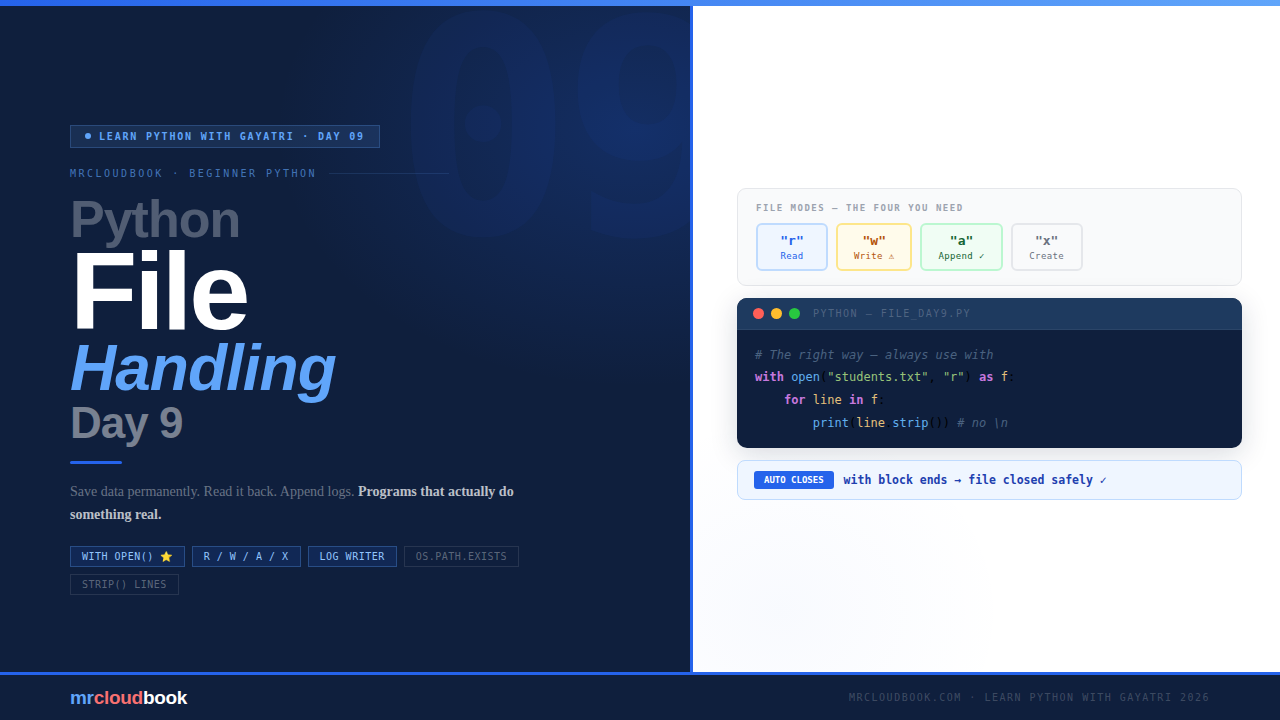
Python File Handling - Day - 09
Python program stores disappears the moment it stops running. File handling changes that. Today you learn to read, write, and append files - the skill …
Python program stores disappears the moment it stops running. File handling changes that. Today you learn to read, write, and append files - the skill …
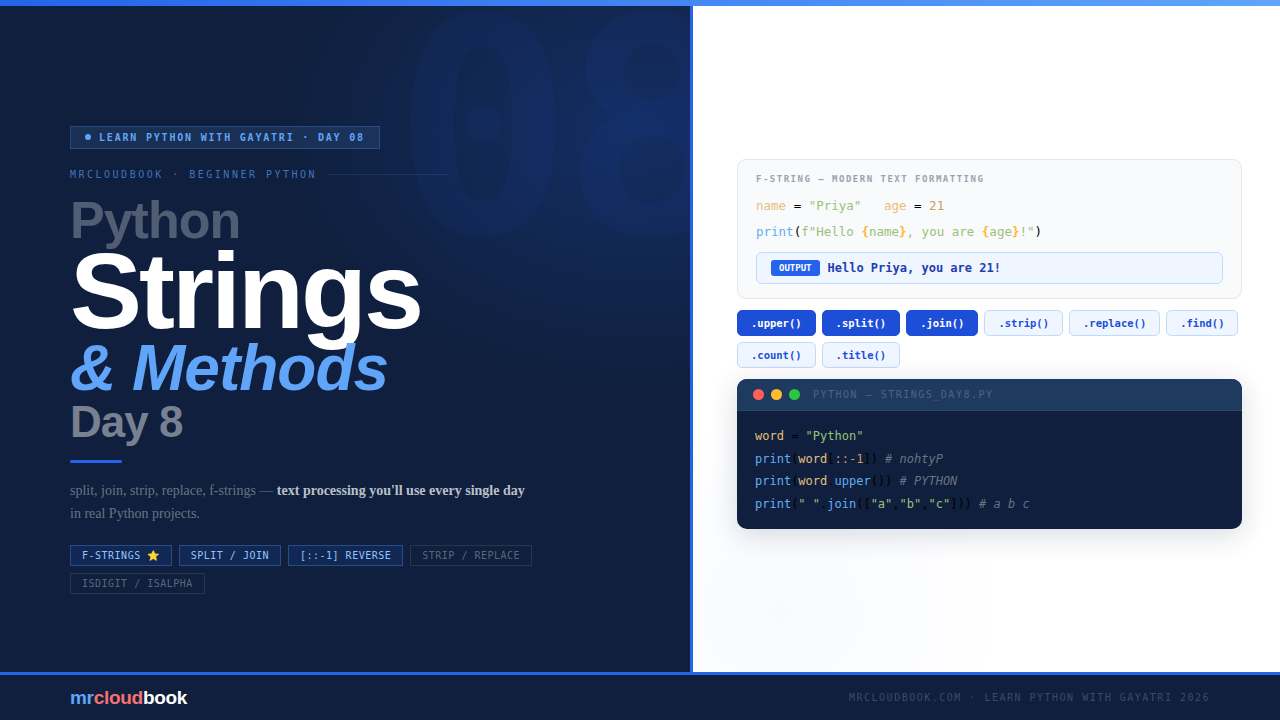
Almost every Python program you write will deal with text. Reading names, processing messages, cleaning data, calling APIs, formatting output - strings are everywhere. Today …
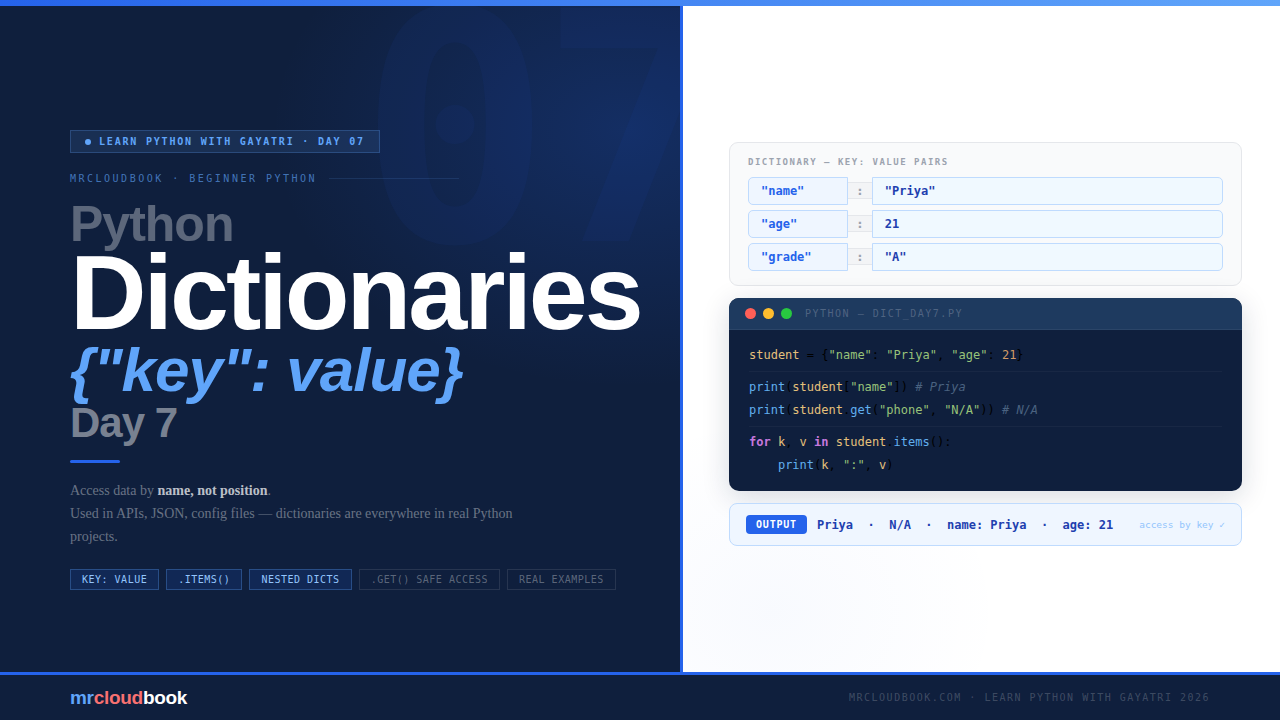
Dictionaries are one of Python's most powerful built-in data structures. Used in APIs, JSON data, config files, automation scripts, and databases - once you understand …
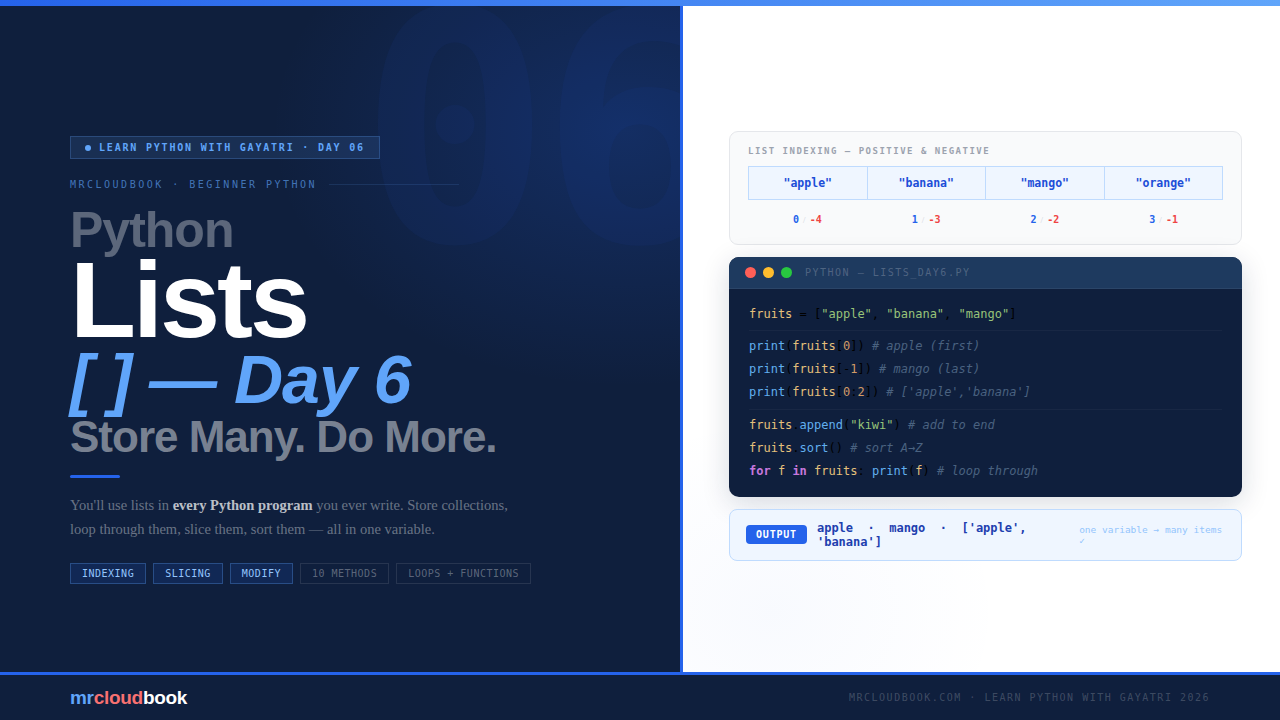
You have many names stored in one place. You can add a new contact, delete an old one, look someone up by their position - …
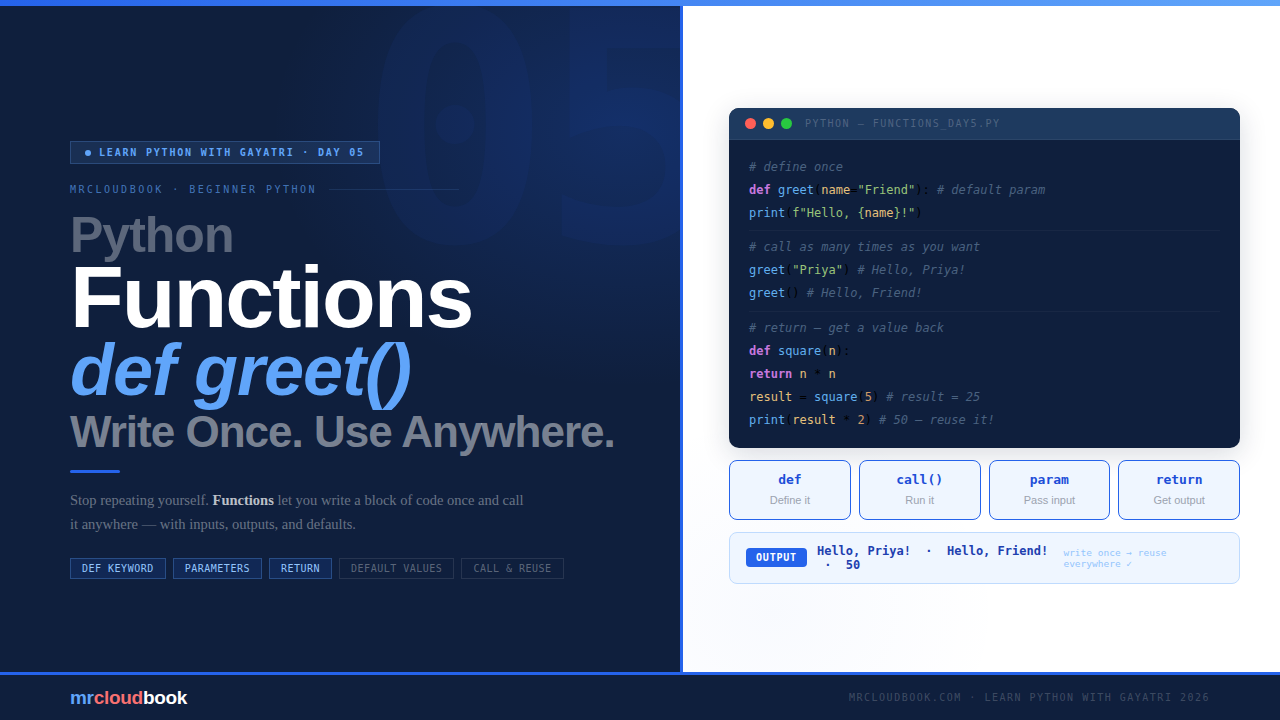
Function is a block of code you write once and can use again and again, wherever you need it. No copy-pasting. No repeating yourself. Just …
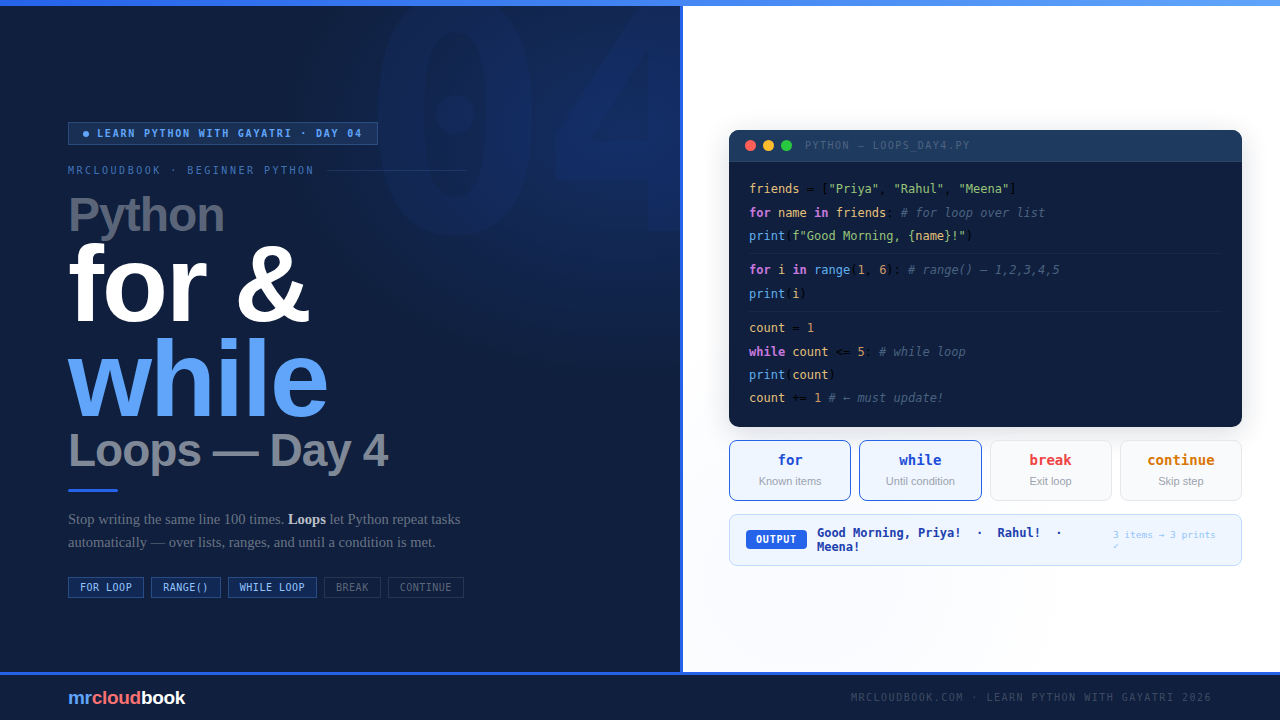
A loop tells Python: keep doing this thing, again and again, until I say stop. Without loops, repetitive tasks mean writing the same line over …
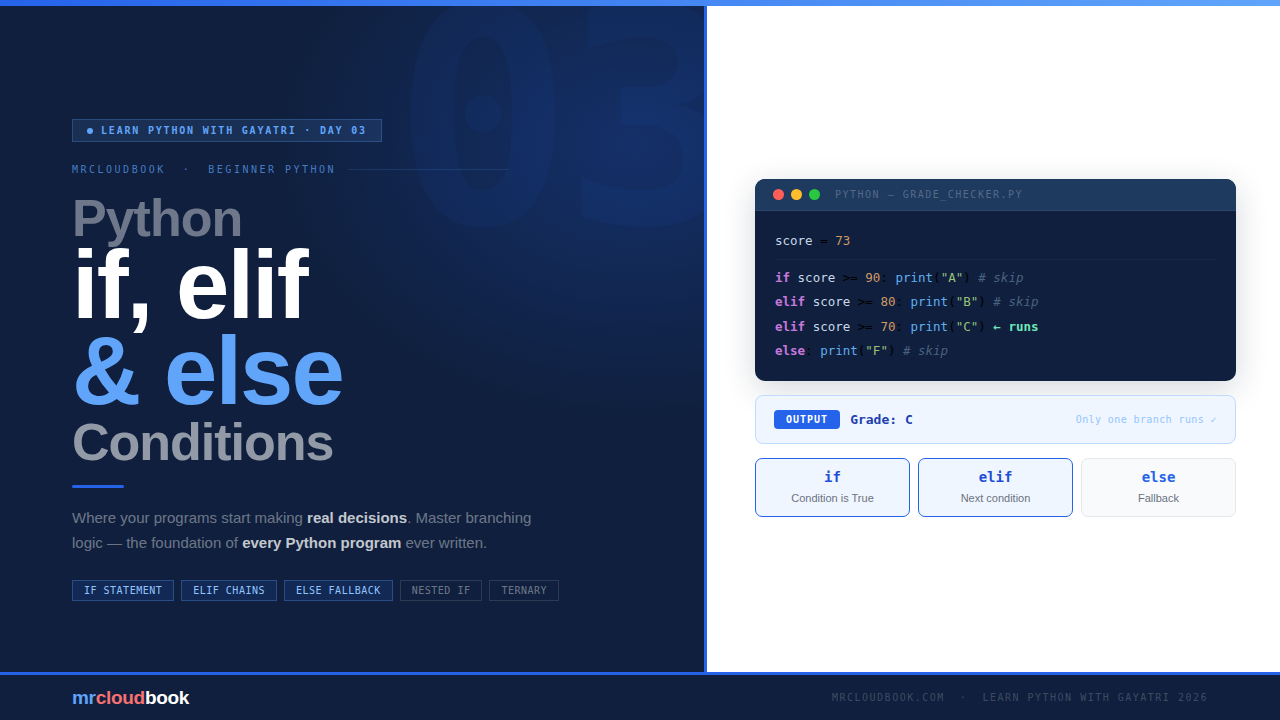
Every program worth writing needs to make decisions. Should the user be allowed to log in? Is a number even or odd? Did the form …
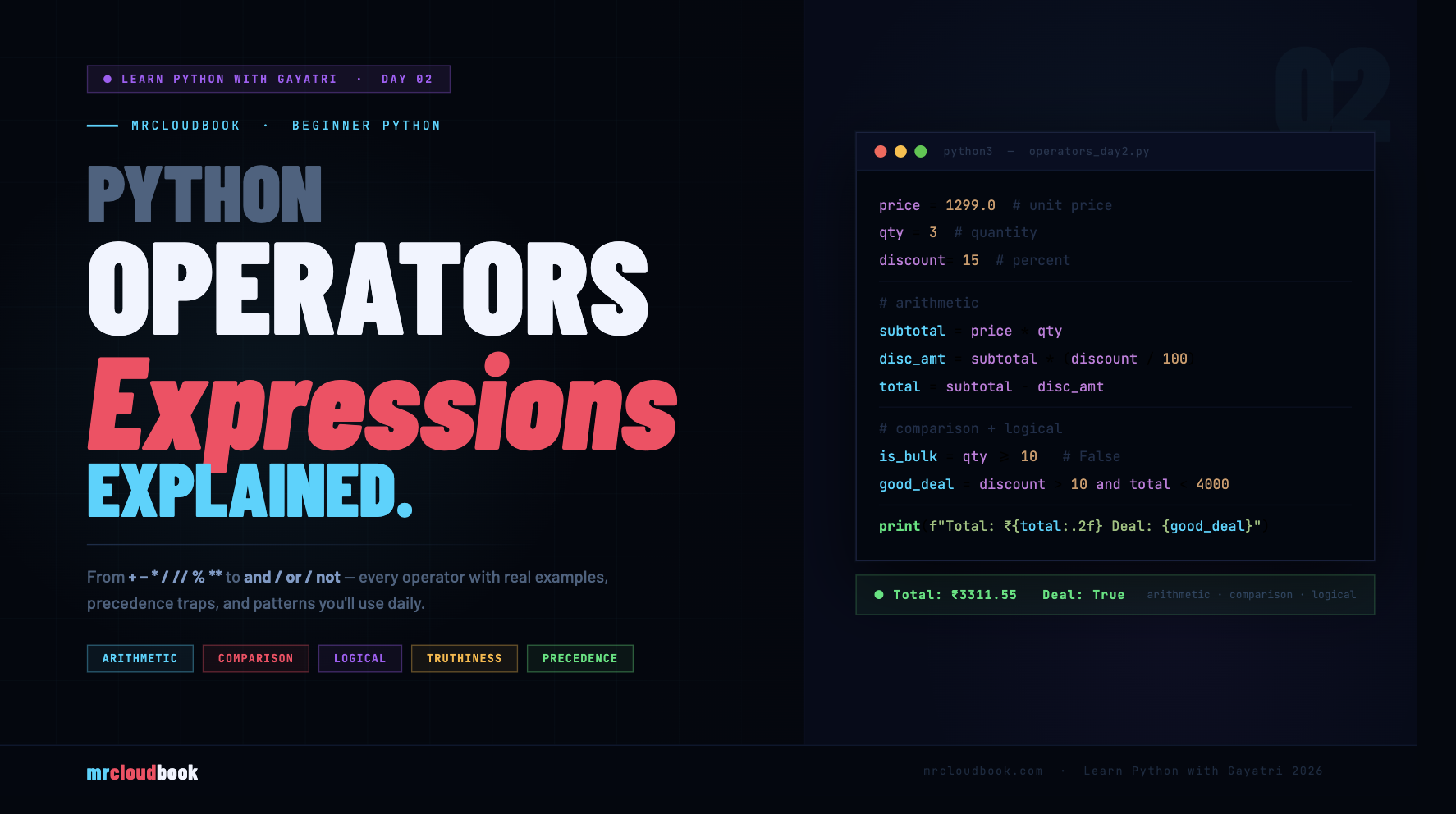
Mastering operators and expressions is like learning the grammar of Python; once you understand how these symbols interact, you can begin writing complex logic with …
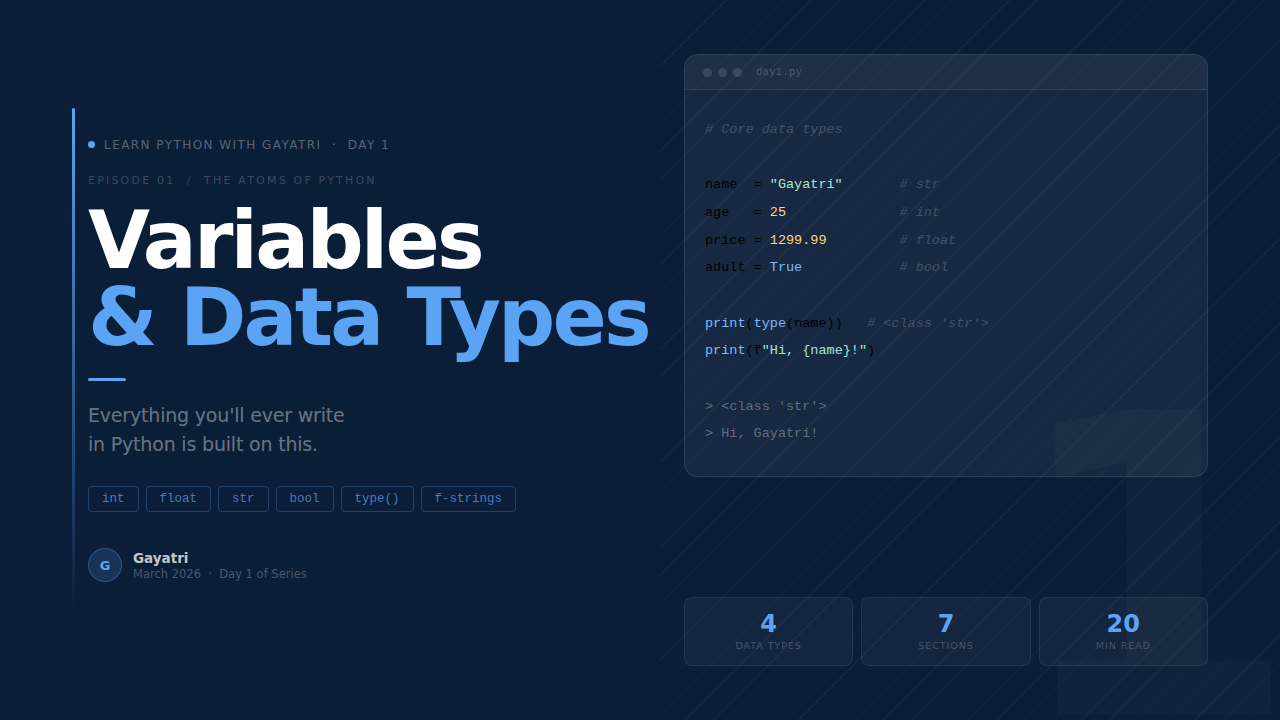
variables and data types - the two most fundamental concepts in any programming language. Everything you'll ever write in Python uses these. Functions, loops, APIs, …